Andrew Martin
Andrew Martin | Beehive Duck Egg
Andrew Martin | Beehive Duck Egg
Couldn't load pickup availability
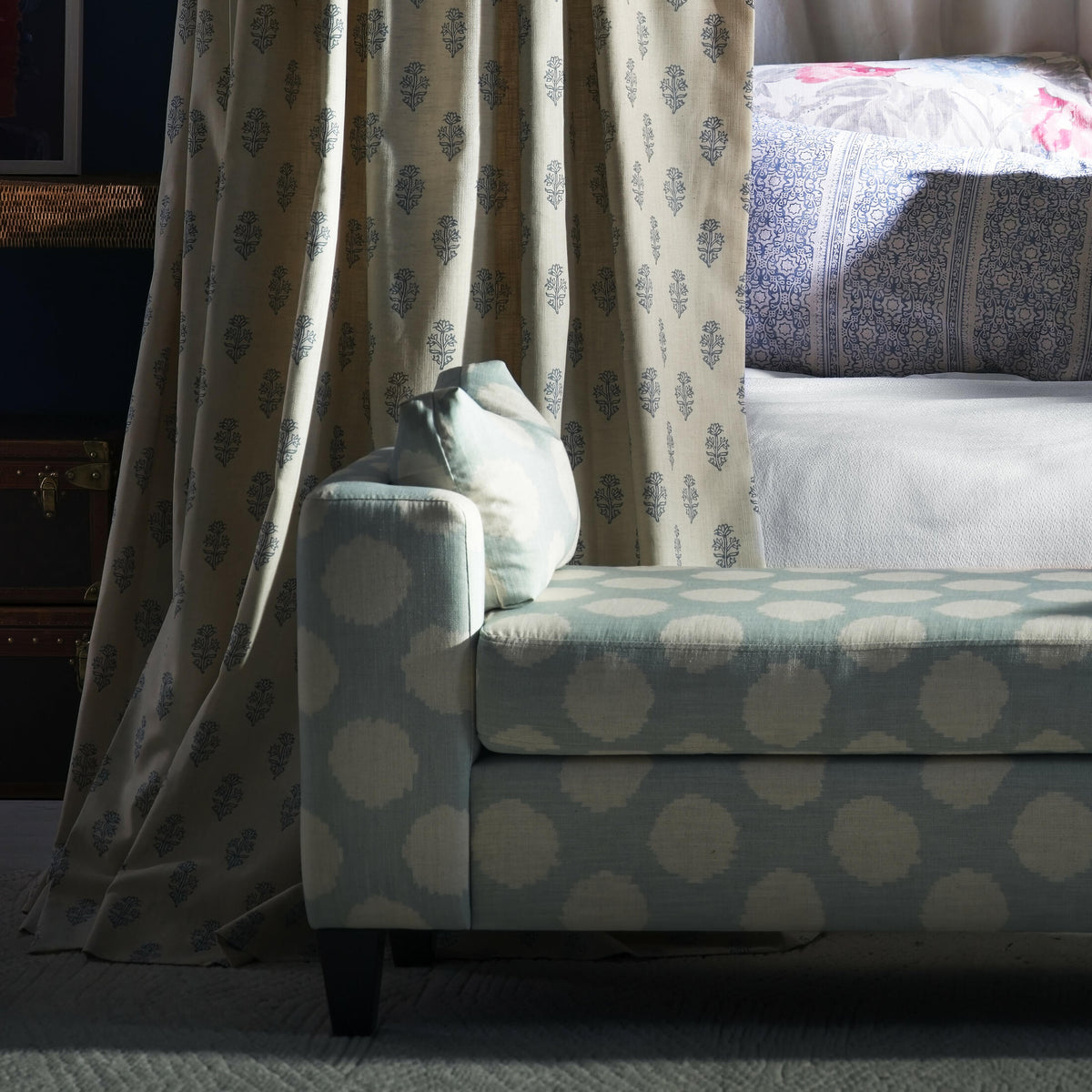
Andrew Martin Beehive in the Duck Egg colourway is a fabric made from 90% cotton and 10% linen, with a circular ikat spot design, from the Pavilion Pattern Book.
The stated uses are curtains and upholstery.
Specification
| Width | 137 cm |
|---|---|
| Pattern Repeat (Vertical) | 39 cm |
| Composition | 90% Cotton 10%Linen |
| Usage | Curtains, Upholstery |
| Care | Professional Dry Clean Only |
More details
Beehive in the Duck Egg colourway is a circular ikat spot arranged in a loose geometric pattern. The earlier description of the design compares the arrangement to the structure that honeybees like to make, and we think that is a fair way to picture it: a scatter of rounded marks that sit together without forming a rigid grid. The ikat spot gives the cloth a slightly irregular, hand-worked character, and the soft duck egg colour keeps the effect gentle rather than loud. It comes from the Pavilion Pattern Book by Andrew Martin, and the listing is for this one colourway.
The cloth is 90% cotton and 10% linen, and it is 137 cm wide. The vertical pattern repeat is 39 cm and the horizontal repeat is 45.7 cm, with a straight match. The weight is 252 gsm. It has a Martindale rub test result of 35,000, and the flame code is cigarette only. The stated uses are curtains and upholstery. For care, the supplier advises professional dry clean only. A technical sheet is available from the supplier if you would like the full specification in one place.
For curtains, we would use this where you want pattern and colour without a heavy graphic statement. The spots read softly from across a room and more closely up close, so it suits a window you want to bring a little life to, in a bedroom, a sitting room or a dining room. Because the repeat is straight match, we would plan the cutting carefully so the spots fall evenly across each width and drop. For upholstery, we would think of an occasional chair, a bench or a headboard, where the pattern can be enjoyed in a single, well-placed piece. We would pair it with plain, quiet companions: a natural linen or a flat weave in a warm neutral for cushions or a second chair, and a calm paint colour on the walls so the pattern remains the one lively element. A touch of warm wood or brushed brass in the surrounding furniture sits well beside a colour like duck egg.
Before ordering, we would always ask to see a sample in the room where it will hang or sit. Duck egg shifts with daylight, and it is worth seeing it against your own walls, floors and other fabrics in both morning and evening light. Check the 137 cm width against the job, and think about how the 39 cm and 45.7 cm repeats will fall on your curtain widths or on the seat and back of a chair, since the pattern needs to be placed with some care. If you would like a sample, a second opinion on pairings, or any detail we have not covered here, please ask us and we will gladly help.
Share