Osborne & Little
Osborne & Little | Orchard Velvet
Osborne & Little | Orchard Velvet
Couldn't load pickup availability
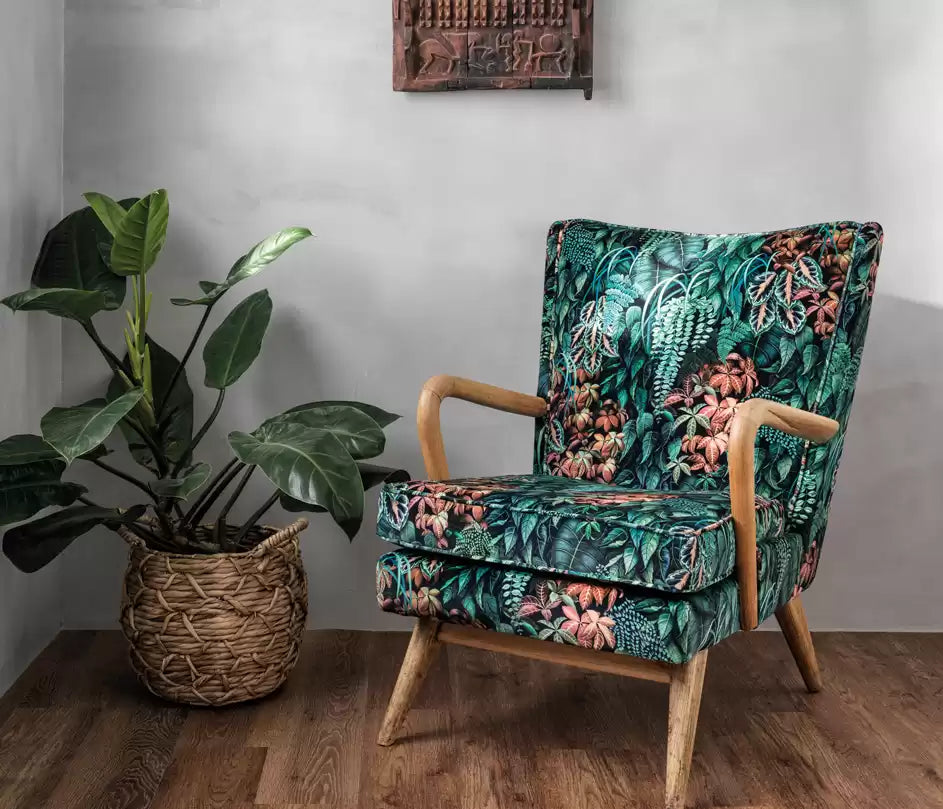
Orchard Velvet takes the Orchard design from Osborne & Little and prints it on a smooth-piled velvet of cotton and viscose. The supplier says the pile gives the pattern a depth and softness that flat cloth cannot reach, and that velvet holds shadow within its surface, so the design shifts and deepens as the light moves. The listing covers two colourways, and we would treat the design as the thing to judge first and the colour second.
The composition is 49% cotton, 46% viscose and 5% polyester, woven in Italy. The cloth is 140cm wide and weighs 520gsm. It is a printed velvet, and the pattern has a vertical repeat of 100cm. It has been rub tested to 30,000 Martindale rubs, which the supplier considers suitable for curtains, blinds and occasional upholstery, such as a bedroom chair or a dressing stool, rather than the most hard-working seat in the house. We would follow that guidance and keep it to those uses.
In curtains, we would use it where the room is lit from the side or changes through the day, since a printed velvet rewards a moving light. A pair of full-length curtains in a bedroom or a quiet sitting room would let the pattern be read at some distance, while the pile keeps the surface from looking flat. As a blind it is a more contained use, and the repeat is worth thinking through so the pattern sits well within the window. For upholstery we would choose a single piece, a bedroom chair or a dressing stool, and leave the plain surrounding furniture to calmer cloths. We would keep walls and carpet quiet, and bring in a plain linen or a fine weave in a nearby tone to rest the eye beside the print.
Before ordering, we would always ask to see a sample in the room where it will hang or sit, at the times of day you use it, because a velvet changes more than most cloths with the light. Check the 140cm width against your pole, track or frame, and allow for the 100cm vertical repeat when working out how much cloth the job needs, since matching the pattern across widths will use more than a plain calculation suggests. If you are weighing the two colourways, a sample of each side by side is the surest way to choose. Full care instructions and any other detail you need are available from us, so please ask.
Share