Osborne & Little
Osborne & Little | Paillons
Osborne & Little | Paillons
Couldn't load pickup availability
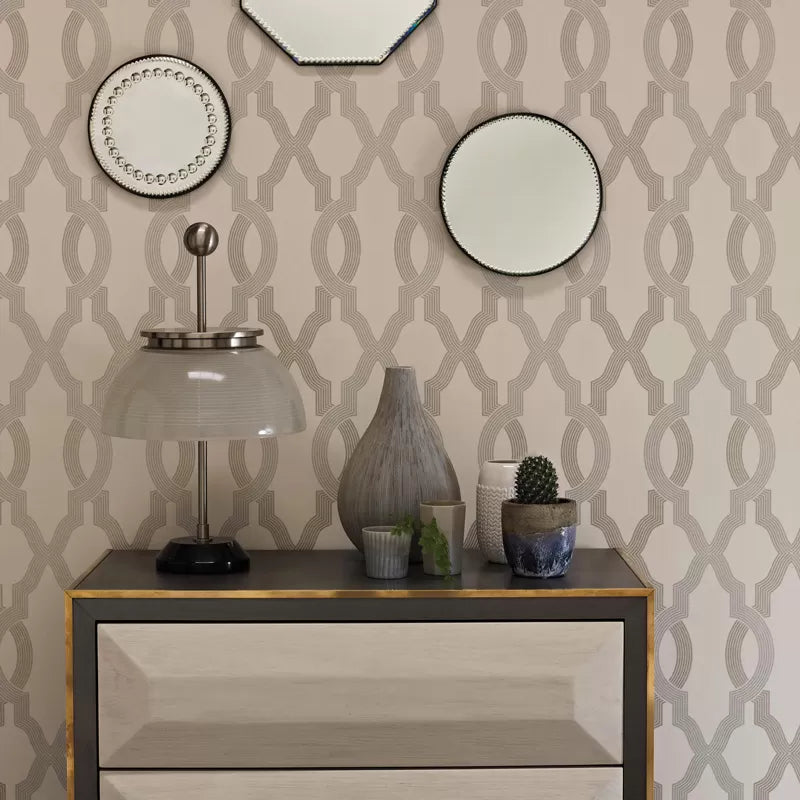
Paillons is a holographic foil that takes its name from the small pieces of foil jewellers once placed under enamel to create a glow, a technique much loved in the Arts and Crafts movement. The paper follows the same idea. Light rises up through the surface rather than sitting on it, so the wall seems to move a little as you pass. The listing covers three colourways of the design, and we would treat them as three variations on one effect rather than one colour with two alternatives.
In terms of specification, Paillons is printed and made in the United Kingdom. It has a metallic character and reads as plain and textured rather than as a drawn motif, so there is no repeat to plan around in the usual sense. It comes from Osborne & Little, and Tobias Oliver offers it in the three colourways mentioned above. For anything further about the construction or the exact make-up of the paper, please ask us and we will find out for you.
The supplier describes this as a wallcovering for rooms used after dark, such as a cloakroom, a bar or a dressing room, where lamplight and candlelight keep the surface alive. We agree with that thinking. A reflective surface gives most when the light is low and warm and comes from more than one direction. We would hang it on a single wall, as the supplier suggests, and let the other walls stay quiet. In a cloakroom that might mean painting the remaining walls in a deep, matt colour that sits back. In a dressing room, we would place the wall behind a mirror or a pair of wall lights so the foil has something to respond to. We would keep furniture and fabrics around it simple, with natural materials, plain linens and unlacquered wood, and let the paper do the talking.
Before ordering, we would always look at a sample in the room it is meant for. A holographic surface changes with the angle you view it from and with every source of light, so a small piece held up on the wall at night will tell you far more than a photograph can. Look at it in daylight and under the bulbs you actually use, and compare the three colourways side by side. Check the wall itself too, because a reflective paper tends to show what is beneath it, and a smooth, well-prepared surface will suit it best. Measure the wall carefully and allow for the room you have rather than the room on paper. If you would like help choosing between the colourways, or need any detail we have not covered here, please ask us.
Share