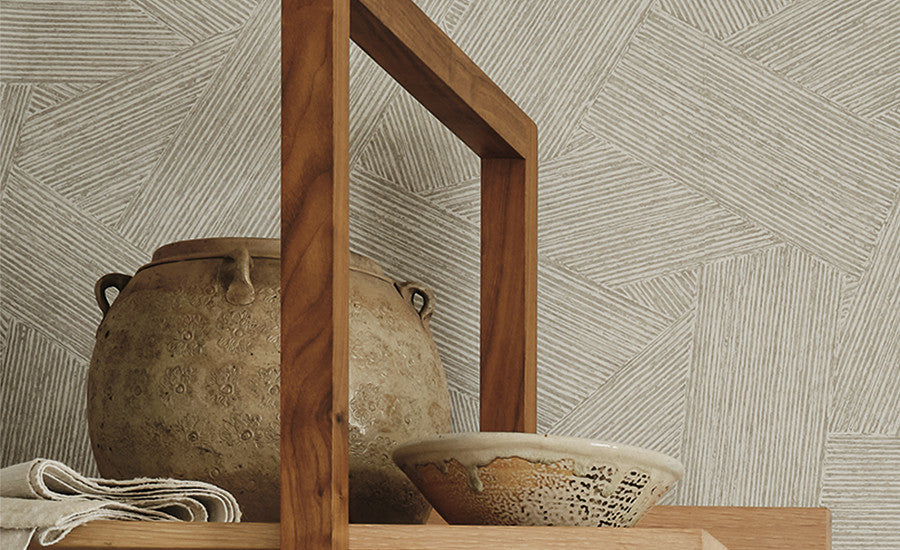
Manzu in Twine is a wallcovering in a natural, string-like neutral, and the colour name describes it fairly. Twine sits between beige and pale tan, with the slightly weathered tone of cord or jute rather than the cleaner cast of stone. We would describe its role in a room as texture and warmth rather than pattern. It is the kind of wall that people do not notice on entering but would miss if it were painted flat, because it gives the light something to settle on and softens a space.
The specifics we hold are limited, so here is what we can state. This is Romo's Manzu wallcovering, SKU W484/02, in the colourway Twine. We have not been supplied with the roll width, roll length, pattern repeat, substrate or country of manufacture, and we will not put numbers to those. Before you calculate quantities, please ask us to confirm the roll dimensions and repeat from the supplier's specification, as these determine how many rolls a room needs and how much waste to allow.
We would use Manzu in rooms where a calm, tactile backdrop is wanted. A living room with a linen sofa and oak furniture is a natural fit, as is a main bedroom where the walls should recede behind a bed in a heavier fabric. In a hallway it gives some depth to a space that is often left blank. We would pair it with off-white woodwork, brass or aged bronze fittings, and curtains in a plain linen or wool a shade deeper than the wall, so the whole scheme stays in one family of tones.
For hanging, confirm with your paperhanger whether the product is paste-the-wall or requires pasting the paper, as this affects method. Check every roll carries the same batch number before any are cut, because shade can vary between print runs, and hang rolls in sequence. Order one spare roll from the same batch for repairs and any future patching, and prepare the wall properly with lining paper or a sealed, smooth surface so the texture is not telegraphed through.