Romo
Romo | Takana – Peacock
Romo | Takana – Peacock
Couldn't load pickup availability
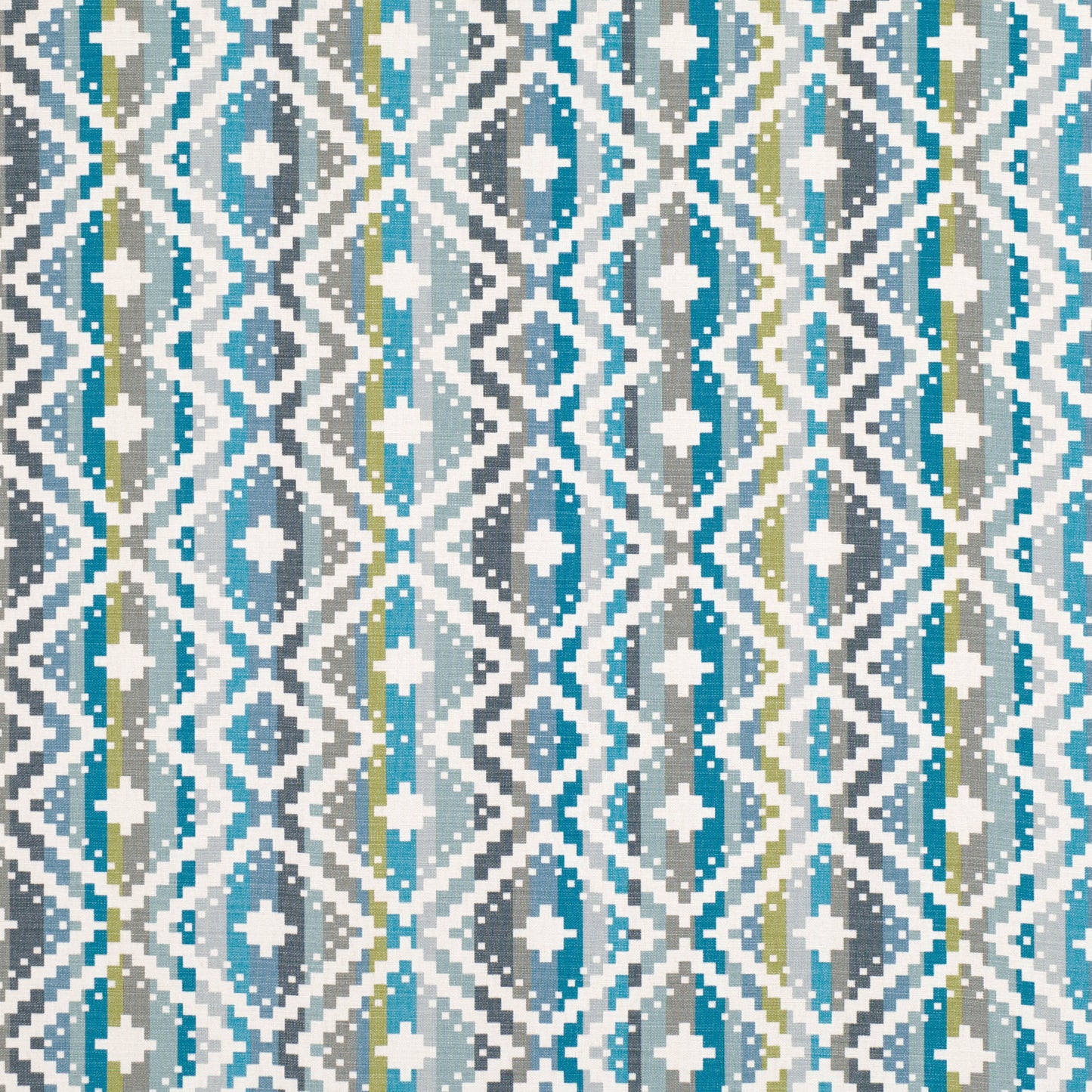
Takana is a fabric we would reach for when a room needs one confident colour and nothing noisy around it. Peacock sits between blue and green, dark enough to read as a deep tone in low evening light and clearer, more teal, when daylight reaches it. We would treat it as a colour first and a texture second, which makes it easy to place. On a large surface it holds a room together; on a smaller piece it acts as a calm point of focus rather than a pattern asking for attention.
We have not been given composition, width, repeat or Martindale figures for Takana, so we would rather not guess at them. The reference is 7790/03 from Romo, and it is sold as an upholstery fabric. Before you commit to a piece that will be used daily, such as a dining chair seat or a family sofa, ask us for the full technical details and a sample. We can confirm the rub count, the width and the care instructions, so the cloth is matched to the use it will actually get.
We tend to use a colour like this on pieces that anchor a room. A pair of tub chairs either side of a fireplace would suit it well, as would a deep-buttoned headboard in a guest bedroom or a banquette running along one wall of a kitchen. It sits comfortably beside warm neutrals such as oatmeal, stone and soft putty, and it looks right against walnut and smoked oak. For contrast, a small amount of rust or tobacco in cushions stops the blue-green feeling cool.
Order a sample length and look at it in the room where it will live, in the morning and again at night, because a colour like Peacock shifts more than most. For quantities, give your upholsterer the exact piece and let them calculate it, adding a little extra for cutting and any pattern-free matching of panels so the colour reads evenly across a sofa. If the piece is new, ask for a trial cover on one cushion before cutting the rest. Keep any offcuts, as they are useful for repairs later.
Share