Rubelli
Rubelli | Filigrana Wall
Rubelli | Filigrana Wall
Couldn't load pickup availability
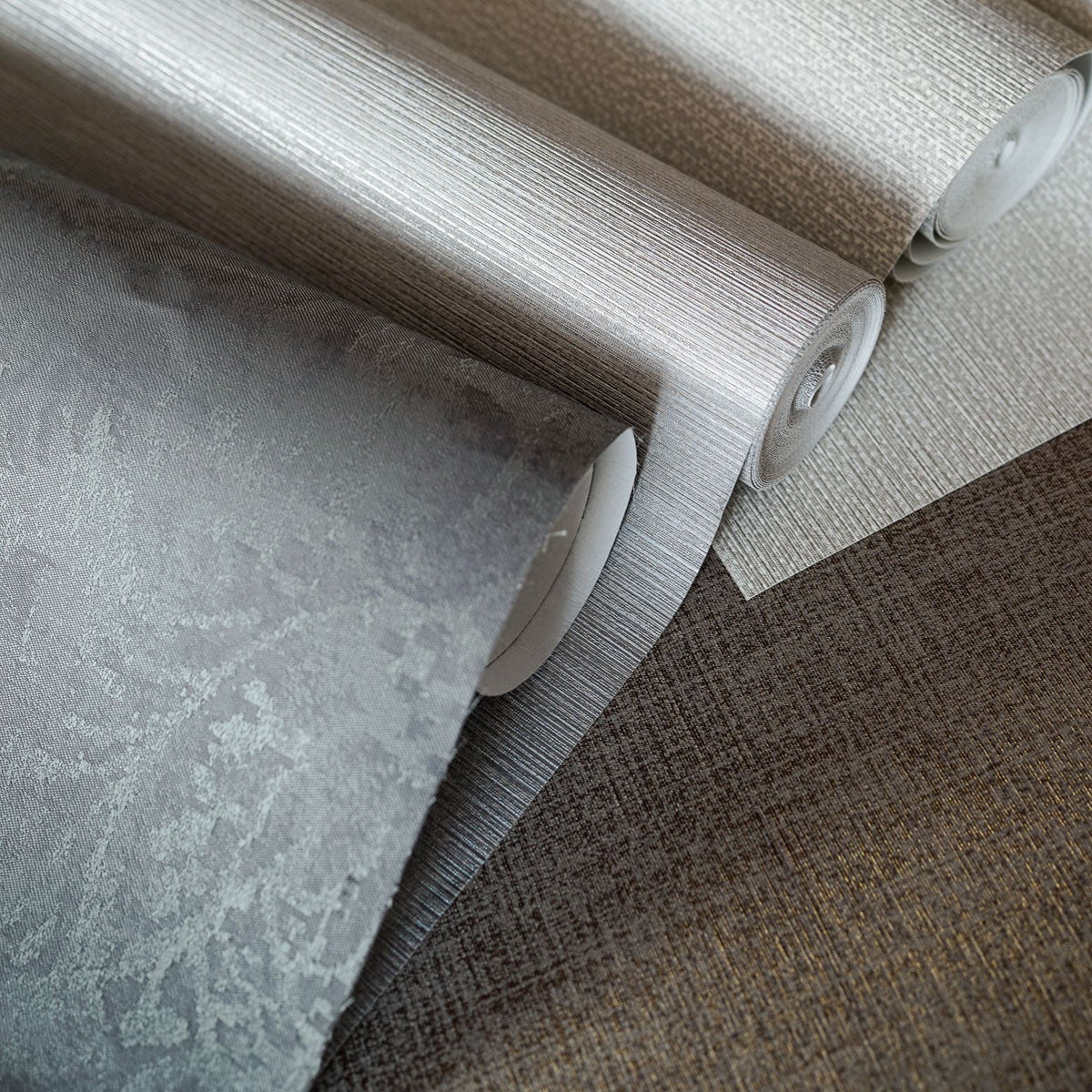
Filigrana Wall is a Rubelli wallcovering from the Rubelli Wallcovering collection, and its pattern takes its cue from frottage, the technique of laying paper over a textured surface and rubbing until the grain comes through. The result is a texture rather than a drawn motif, so the wall carries surface and depth without a figure to follow. Rubelli describes the palette as pairing metallic colours, silver and bronze among them, with pastel shades. Nine colourways are offered, among them Avorio, Madreperla, Paglia, Sabbia, Argilla and Legno, with Stagno, Argento and Acqua completing the range.
The covering is a fabric on a nonwoven base and is made in Italy. It is 135 cm wide, with a vertical repeat of 57 cm and a horizontal repeat of 67.5 cm, and it weighs 500 g/lm. Its stated use is as a wallcovering. Rubelli notes that it has had a soil repellent treatment, and it is listed with EN 12149 method A-B-C.
We would use Filigrana Wall where a room wants character from the surface itself and not from an obvious pattern. Because the design is texture rather than figure, it sits comfortably behind furniture, framed work and strong colour in the rest of the scheme. The metallic colourways, silver and bronze among them, are the ones we would reach for in rooms lit mainly by lamps and wall lights, and we would pair them with dark timber and aged brass. The paler tones suit a quieter scheme, and we would keep the rest of the palette soft, with plain linens and painted woodwork in similar values. Where the wall is the main feature of the room, we would keep curtains and upholstery plain so the texture is not competing with anything.
Before ordering, we would always look at a sample on the wall it is intended for, in both daylight and evening light, since a textured, metallic surface can look quite different from one hour to the next. Check the 135 cm width against the height and the run of the wall, and work out how the 57 cm and 67.5 cm repeats will fall before any cutting begins. Please ask us for anything else you need to know, and we will gladly help.
Share