Rubelli
Rubelli | Katagami
Rubelli | Katagami
Couldn't load pickup availability
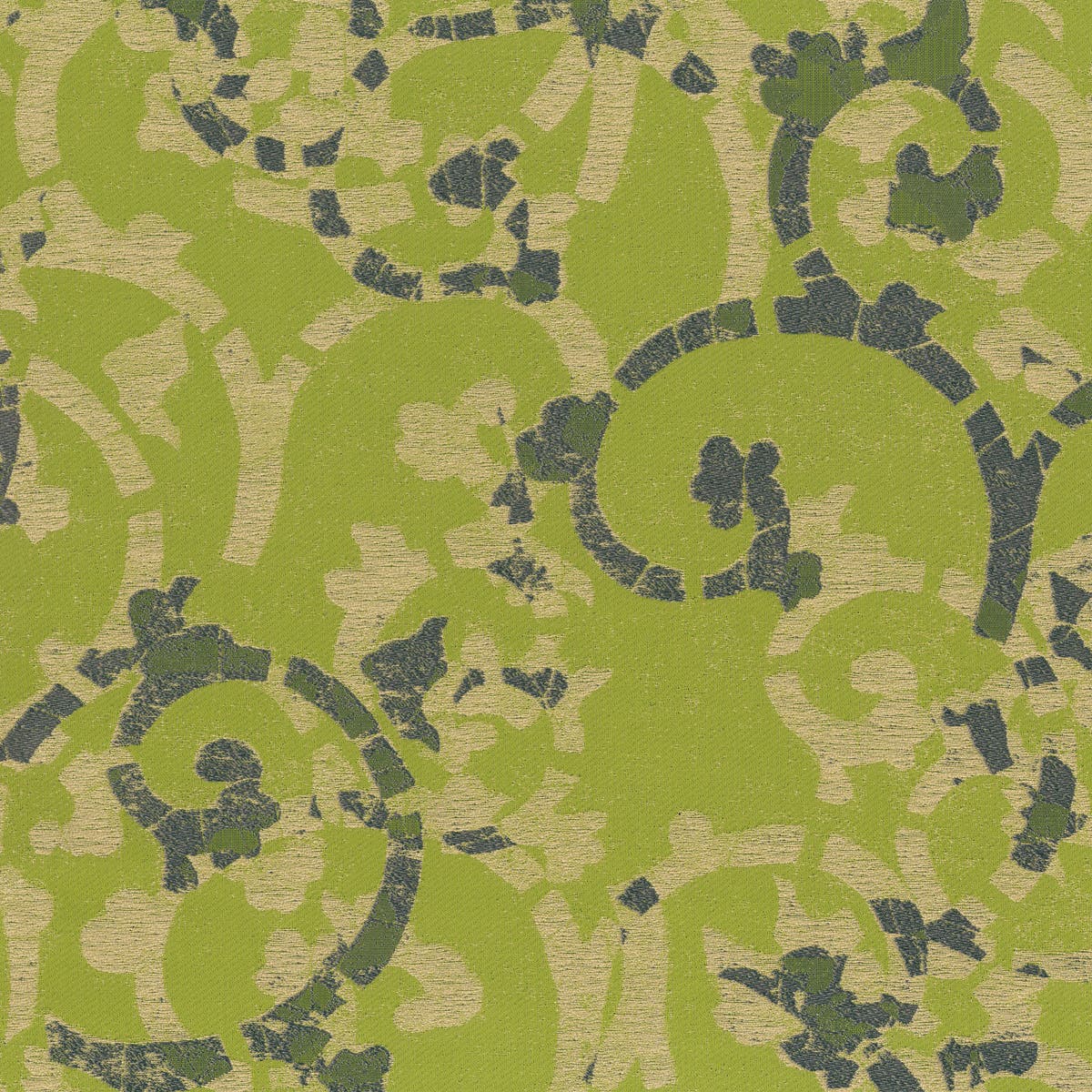
Katagami is a Rubelli design that takes its name and its character from the stencils Japanese dyers have long used to pattern kimono cloth. The supplier describes it as an all-over design inspired by katagami, a sort of mould, which in Japan have always been used for designing and dyeing fabrics for kimonos, works of art in their own right. Here the idea is carried into a woven cloth, with the pattern spread evenly across the whole surface rather than gathered into one area. The listing covers eleven colourways, among them Avorio, Giallo napoli, Cipria, Nuvola, Argento and Acqua, so what follows describes the design rather than any one colour.
The cloth is a jacquard weave in 100% polyester, and the fibre is Trevira CS. It is 140 cm wide and made in Italy. The vertical repeat is 56 cm and the horizontal repeat is 70 cm. Rubelli gives the weight as 380 g/lm. The stated uses are curtains, blinds, cushions and upholstery. The supplier lists a long run of fire certifications: France M1 NFP92-503-504-505, Germany B1 DIN 4102-1, IMO 7 for curtains, IMO 8 for upholstery, Italia Classe 1 Tendaggi, U.S.A. CAL.TB117:2013, UK Contract curtains BS5867, UK Contract upholstery BS7176 and UK Cigarette BS5852 source 0.
Within those uses, we would start with curtains and blinds, where a patterned weave can be seen at full height and the repeat can be planned to land well on the drop. Cushions are a gentler way in, and we would make them in one of the paler colourways against a plainer upholstered piece. For upholstery, we would choose a single chair or a headboard and keep the surrounding fabrics quiet. A cloth with an all-over design generally does its best work when the plain things around it are allowed to stay plain, so we would pair it with a flat weave or a smooth plain cloth in a close tone, and keep the palette to two or three colours. The range runs from soft shades such as Cipria and Nuvola to deeper ones such as Pavone, Iris and Erba, which gives room to match an existing scheme or to set one apart from it.
Before ordering, we would always look at a sample in the room where it will hang or sit, in both daylight and evening light, because a woven pattern can read quite differently from one colourway to the next. Check the 140 cm width against the job, and allow for the 56 cm vertical and 70 cm horizontal repeats when you plan how the pattern will fall and match across joins, especially on blinds and seat covers where the seams are visible. If your project needs particular fire certification, tell us what is required and we will go through it with you. Ask us for any other detail you need before you decide.
Share