Rubelli
Rubelli | Zecchinetta
Rubelli | Zecchinetta
Couldn't load pickup availability
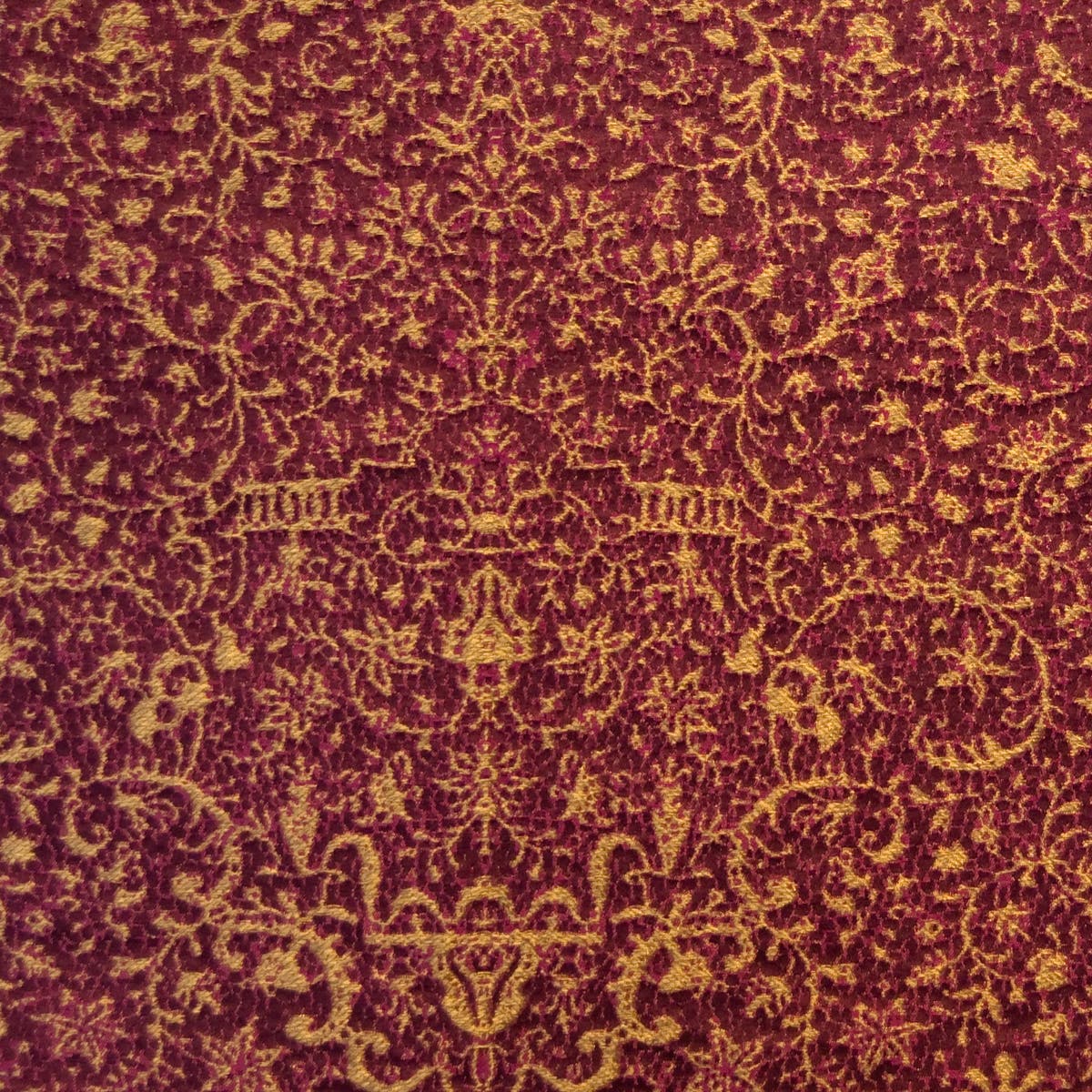
Zecchinetta is Rubelli's textile revival of the decoration that embellished the fine lace made in Venice in the eighteenth century. The ornament is a scattering of small motifs from the Rocaille repertoire, set out across the surface in elegant arrangements. The supplier describes the effect as one of richness and variety, with transparency and unexpected highlights, and speaks of a refined Venetian Rococo taste in constant exchange with the light. It is a woven jacquard, and the lightness described is part of how the design is built rather than something added afterwards. The listing covers six colourways: Fiordaliso, Pulce, Avorio, Marrone, Ottone and Cardinale.
The cloth is a blend of 32% viscose, 25% acetate, 24% silk and 19% linen. It is 140 cm wide and woven in Italy, with a weight of 360 g/lm. The vertical repeat is 101 cm and the horizontal repeat is 70 cm. The stated uses are curtains, blinds and cushions. The supplier lists certifications to U.S.A. CAL.TB117:2013 and UK Cigarette BS5852 source 0. Its style is classed as classic.
We would use Zecchinetta where the stated uses allow: curtains, blinds or cushions. On curtains, the long repeats mean the full design only shows across a generous drop, so we would favour full-length hanging in a room where the cloth can be seen from a little distance. On a blind, the pattern will be seen in part, and we would decide beforehand which section of the design should sit in the window. On cushions you will be working with a fragment of the repeat, which is not necessarily wrong, but we would choose that fragment deliberately rather than leave it to the cutting table. Because the design carries so many small motifs, we would keep what sits beside it plain: a quiet wool, a heavy linen or a flat weave in a tone drawn from the chosen colourway. Of the six, we would look first at the lighter ones for a room that needs to stay open, and at Marrone or Cardinale where a warmer, more enclosed feel is wanted.
Before ordering, we would always ask to see a sample in the room where it will hang, at different times of day, since a cloth that plays with light is best judged in the light it will actually live in. Check the 140 cm width against the job, and think about how the 70 cm horizontal and 101 cm vertical repeats will fall across each width and drop, as this affects how much cloth a project needs and where the pattern lands at the leading edge or on a cushion face. Full care instructions are available from us, and if there is any other detail you need, please ask.
Share